
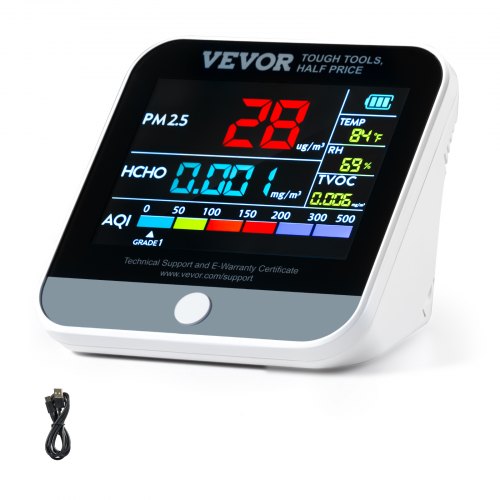
An air quality monitor for PM 2.5 and PM 10 measures the harmful dust particles in the air around you in real time. Whether at home, in an office or on an industrial site, an air quality monitor helps you understand and improve the air you breathe. In this guide, we explain what an air quality monitor is, why it matters, how it works and how to choose one for PM 2.5 and PM 10.
What Is an Air Quality Monitor?
An air quality monitor is a device that measures pollutants in the air, especially particulate matter such as PM 2.5 and PM 10. It reports the concentration in real time and often shows an easy air quality index. A good air quality monitor may also measure temperature, humidity and gases. Because it makes pollution visible, an air quality monitor is the first step toward cleaner, healthier air.
Why an Air Quality Monitor Matters
Polluted air harms health, so an air quality monitor for PM 2.5 and PM 10 protects you and your family. Fine dust is invisible, and indoor air is often worse than people expect. Without an air quality monitor, you cannot know when levels are unsafe. Therefore, it helps you ventilate, filter and act before pollution affects your health.
Key Benefits of an Air Quality Monitor
- Real-time PM 2.5 and PM 10 readings.
- Clear air quality index and alerts.
- Better health protection at home and work.
- Insight to improve ventilation and filtering.
- Data logging for trends over time.
How an Air Quality Monitor Works
An air quality monitor uses laser light-scattering sensors to measure particles. Air enters a sensing chamber, and PM 2.5 and PM 10 particles scatter a beam of light. The sensor converts this into concentration values and an air quality reading. Many monitors add displays, apps, cloud access and alerts. Because of this, an air quality monitor gives accurate, real-time data wherever you need it.
Indoor vs Outdoor Air Quality Monitor
An air quality monitor can be designed for indoor or outdoor use. Indoor monitors are compact and user-friendly, ideal for homes, offices and schools. Outdoor and environmental monitors are rugged and weatherproof for ambient air. Both measure PM 2.5 and PM 10, but the build and connectivity differ. The right type depends on where you want cleaner air.
Where an Air Quality Monitor Is Used
- Homes and apartments.
- Offices, schools and hospitals.
- Industrial and commercial buildings.
- Urban and outdoor monitoring.
- Construction and traffic areas.
Choosing the Right Air Quality Monitor
When choosing an air quality monitor for PM 2.5 and PM 10, focus on accuracy and features. First, confirm reliable PM 2.5 and PM 10 measurement. Next, check the display, app and alert options. Also consider connectivity, data storage and indoor or outdoor suitability. Finally, pick a trusted supplier for support and calibration. Explore our range on the products page, and learn about health limits from the World Health Organization.
Conclusion
An air quality monitor for PM 2.5 and PM 10 is the simplest way to understand and improve the air you breathe. It protects health, guides action and gives you real-time peace of mind. Whether for a home, office or industrial site, the right air quality monitor is a valuable investment. To find the ideal model, contact Saksham Scientific today.