
Beyond the Air We See: Why You Need a Dedicated PM2.5 PM10 Environmental Dust Monitor
Introduction: The Invisible Challenge to Public Health
Air quality is a global concern, and at the heart of this challenge is particulate matter (PM). These microscopic pollutants are classified by size, with PM10 (inhalable coarse particles) and PM2.5 (fine inhalable particles) posing the greatest threat to human health and the environment. PM2.5, in particular, is small enough to enter the bloodstream and is linked to severe cardiovascular and respiratory diseases.
For environmental agencies, construction firms managing site boundaries, or residential communities demanding better air quality, a basic weather station isn’t enough. You need precision. This is why the PM2.5 PM10 Environmental Dust Monitor has become the essential tool for accurate, defensible air quality assessment.
1. The Power of Dual-Sensing: Air Quality Monitor PM 2.5 PM 10
A comprehensive Air Quality Monitor PM 2.5 PM 10 doesn’t just measure total dust; it intelligently separates the pollutants by size, offering critical advantages:
Targeted Risk Assessment: PM10 is often associated with mechanical sources like construction activity, road dust, and wind erosion (nuisance dust). PM2.5 comes mainly from combustion sources like vehicle exhaust, industrial emissions, and wildfires. By measuring both, the monitor helps you pinpoint the source of pollution (e.g., if PM10 spikes, focus on site traffic; if PM2.5 spikes, check local combustion sources).
Health and Compliance: Regulators, including bodies like the CPCB, set different standards for PM10 and PM2.5 based on their distinct health impacts. A dual-sensor monitor ensures you have the necessary data points to meet the National Ambient Air Quality Standards (NAAQS) and demonstrate full compliance.
Holistic Environmental Data: Environmental monitoring requires more than just dust readings. Leading PM2.5 PM10 Environmental Dust Monitor solutions often integrate sensors for other criteria pollutants (like NO2, SO2, and O3) and meteorological data (wind speed/direction, humidity) to understand the why behind a pollution event.
2. Applications: Where Environmental Monitoring is Critical
The need for highly accurate, continuous monitoring spans multiple sectors:
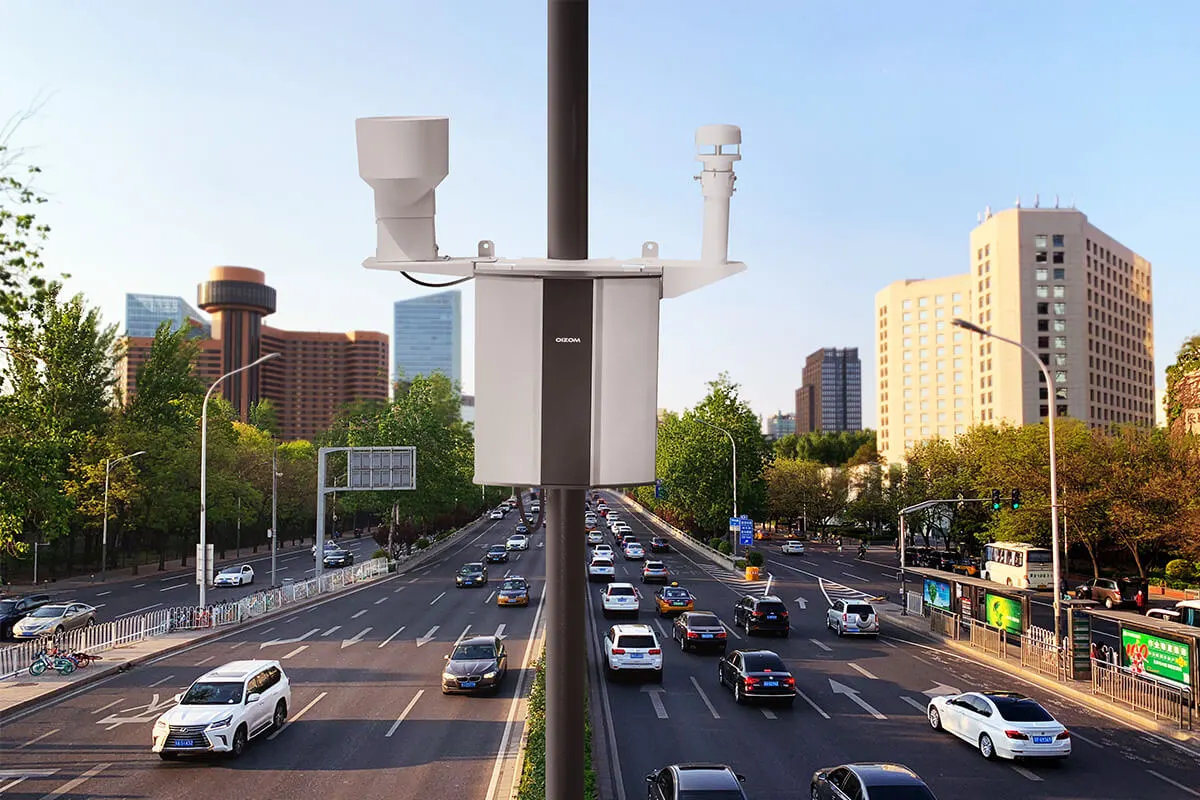
Urban and Smart Cities: Local governments use networks of Air Quality Monitor PM 2.5 PM 10 stations to track city-wide air trends, calculate the Air Quality Index (AQI), and issue public health alerts, especially during pollution episodes.
Construction Site Boundary Monitoring: Construction and mining operations are legally required to manage dust migration. Placing a PM2.5 PM10 Environmental Dust Monitor at the perimeter provides real-time proof that operations are not negatively impacting surrounding residential areas, avoiding fines and legal disputes.
Industrial Emissions: Facilities like power plants, steel mills, and chemical companies use these monitors to assess the ambient impact of their stack emissions and verify the efficacy of their internal pollution control equipment.
Research and Public Health Studies: Researchers rely on the precise, long-term data from these monitors to study the concentration-response relationship between particulate matter exposure and public health outcomes.
3. The Technology: Accuracy in the Face of the Elements
Professional environmental dust monitors must be built for continuous outdoor deployment in harsh conditions. They typically utilize high-accuracy methods:
Beta Attenuation Monitoring (BAM): Often used in regulatory-grade stations, BAMs provide a near-gravimetric standard by measuring the absorption of beta rays by the collected dust mass, delivering highly reliable data.
Advanced Laser Scattering: Modern low-cost, high-correlation sensors use advanced laser scattering technology within a rugged, weather-resistant enclosure, providing real-time data comparable to regulatory instruments for community and site monitoring applications.
Data Reliability: Crucially, a professional PM2.5 PM10 Environmental Dust Monitor provides remote access to data via cloud platforms, allowing for instant alerts when limits are breached and enabling the immediate generation of time-stamped compliance reports.
Conclusion: Taking Control of Your Environment
Air pollution is a universal challenge, but it is one that can be managed effectively with the right tools. Deploying an accurate Air Quality Monitor PM 2.5 PM 10 system is the critical first step toward demonstrating environmental stewardship, protecting public health, and ensuring regulatory compliance. By understanding the dual nature of PM2.5 and PM10, you can implement smarter, more targeted abatement strategies.
👉 Ready to gain critical insight into the air quality around your project or community?
Contact us today to explore the best PM2.5 PM10 Environmental Dust Monitor options for your specific monitoring requirements.