
Dust Monitor: The Complete Guide to Air Quality Monitoring
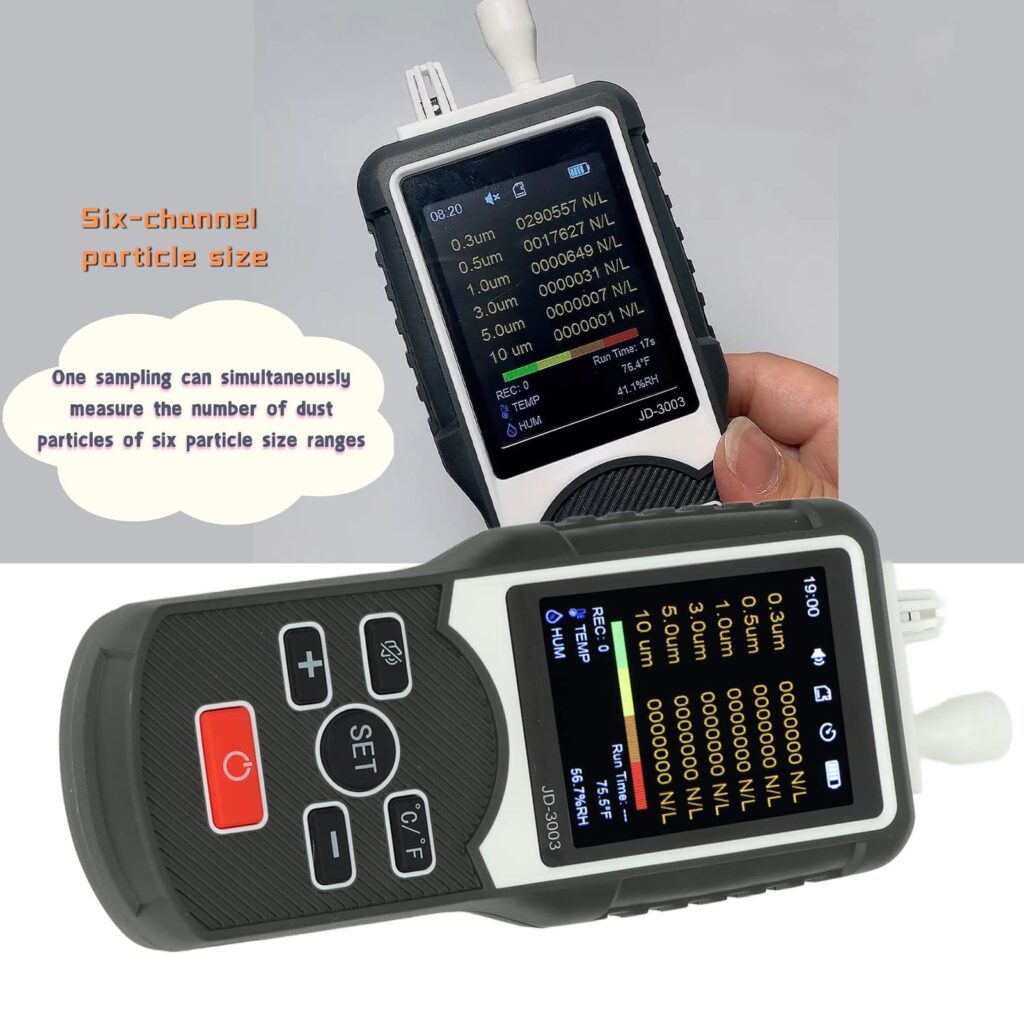
A dust monitor is an essential instrument for measuring airborne dust and particulate matter in real time. Whether you manage a factory, a busy construction site or an office, a reliable dust monitor protects health, improves safety and helps you meet strict air quality rules. Dust is invisible yet harmful, so you simply cannot manage it without measuring it first. In this complete guide, we explain what a dust monitor is, why it matters, how it works, its key benefits, where it is used and how to choose the right one for your needs.
What Is a Dust Monitor?
A dust monitor is an air quality device that continuously measures dust and fine particles in the surrounding air. It reports the concentration of particulate matter, usually PM2.5 and PM10, so you always know the current air quality. PM2.5 refers to very fine particles that travel deep into the lungs, while PM10 covers coarser dust from roads, construction and industry. Unlike a basic one-time tester, a modern dust monitor gives live readings, stores historical data and can send instant alerts. Therefore, it is a practical and reliable tool for both indoor and outdoor monitoring.
Why a Dust Monitor Matters
Dust levels can change very quickly, so a dust monitor keeps you informed at every moment. For example, construction work, heavy traffic, strong winds and industrial processes can all raise dust to harmful levels within minutes. Without a dust monitor, these dangerous spikes often go unnoticed until workers feel the effects or a regulator issues a notice. As a result, a dust monitor helps you act early, protect people’s health and avoid breaching legal air quality limits. In short, it turns invisible risk into clear, actionable information that you can trust.
Key Benefits of a Dust Monitor
A good dust monitor offers several clear advantages for any workplace or home:
- Instant alerts when dust rises above safe levels, so your team can respond quickly.
- Better health protection for workers, children, the elderly and other sensitive people.
- Easy compliance with workplace safety and environmental regulations.
- Smarter decisions, because live data reveals exactly where pollution comes from.
- Reliable data logging for compliance reports, trend analysis and long-term planning.
How a Dust Monitor Works
Most modern dust monitors use laser light-scattering technology to measure particles. Air flows through a small sensing chamber, and the dust particles inside scatter a beam of light. The sensor then measures this scattered light and converts it into accurate PM2.5 and PM10 concentration values. In addition, advanced units include digital displays, cloud connectivity, mobile-app integration, SMS or email alerts and remote dashboards. Because of these features, a dust monitor delivers precise, real-time data wherever you place it, from a single room to an entire industrial campus.
Real-Time Data and Smart Connectivity
One major advantage of a modern dust monitor is real-time data with smart connectivity. Live readings let you see air quality the moment it changes, rather than waiting hours for lab results. Many devices connect to the cloud, so you can view dust levels on a phone or computer from anywhere. In addition, automatic alerts warn you the instant levels rise, which means faster action. Because the data is stored online, you can also review trends, build reports and prove compliance with ease.
Dust Monitor vs Traditional Sampling
A dust monitor offers clear advantages over traditional sampling methods. Older methods collect a sample and send it to a lab, so results arrive too late to act on. A real-time dust monitor, however, shows current conditions instantly. This speed makes a huge difference on busy sites where dust changes minute by minute. Moreover, continuous monitoring captures short spikes that a single sample would miss. As a result, a dust monitor gives a more complete and far more useful picture of air quality.
Where Dust Monitors Are Used
A dust monitor is used across a wide range of industries and environments. The most common applications include:
- Industrial sites such as factories and processing plants that must control workplace dust.
- Construction and demolition projects, where dust levels change rapidly.
- Mining and quarrying zones, to protect both workers and nearby communities.
- Urban air quality networks that support smart cities and public health alerts.
- Indoor spaces like offices, schools, hospitals and homes that need cleaner air.
Choosing the Right Dust Monitor
When you choose a dust monitor, focus on a few key points. First, check the accuracy and sensitivity for both PM2.5 and PM10, as these decide how reliable your readings are. Next, look at the update frequency, because faster real-time readings give you better insight. Also consider connectivity options such as Wi-Fi, GSM and cloud access, along with data storage and reporting tools. Finally, match the build to the environment: choose a rugged, weatherproof unit for industrial use or a compact, user-friendly model for indoor needs. You can explore a wide selection on our products page, and learn more about particulate matter from the US EPA.
Conclusion
A dust monitor is a powerful tool for accurate, real-time detection of dust and particulate matter. It enables fast decisions, stronger health protection and simple regulatory compliance. Whether you need it for a factory, a construction site, a mine or an indoor space, the right dust monitor is a smart investment in cleaner, safer air. By measuring what was once invisible, a dust monitor gives you the confidence to act early and protect everyone around you. To find the ideal model for your application, contact Saksham Scientific today for expert guidance.