
Industrial Dust Monitoring Equipment: A Buyer Guide
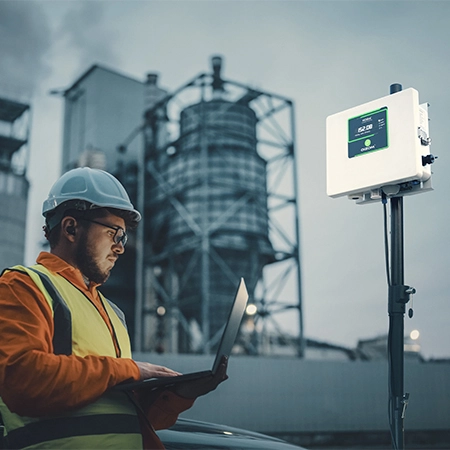
Industrial dust monitoring equipment helps factories, plants and worksites measure and control airborne dust around the clock. Built for harsh conditions, this equipment tracks PM 10 and PM 2.5, triggers alarms and records data for compliance. In this guide, we explain what industrial dust monitoring equipment is, why it matters, how it works and how to choose the right system for your operation.
What Is Industrial Dust Monitoring Equipment?
Industrial dust monitoring equipment is a range of rugged instruments designed to measure dust in tough industrial environments. Unlike consumer monitors, it runs continuously, handles high dust loads and resists heat, moisture and vibration. It measures particulate matter such as PM 10 and PM 2.5 and connects to alarms, dashboards and reporting tools. As a result, industrial dust monitoring equipment is built for reliability and accuracy where it matters most.
Why Industrial Dust Monitoring Equipment Matters
Industrial processes release large amounts of dust, so industrial dust monitoring equipment is essential for safety and compliance. Long-term dust exposure causes serious lung disease, and regulators set strict limits. Without proper equipment, companies risk worker health, fines and shutdowns. Therefore, this equipment protects people, keeps operations compliant and supports a responsible reputation.
Key Benefits of Industrial Dust Monitoring Equipment
- Continuous real-time monitoring of PM 10 and PM 2.5.
- Instant alarms when dust crosses limits.
- Rugged, reliable operation in harsh conditions.
- Compliance with safety and environmental rules.
- Detailed data for audits and reporting.
How Industrial Dust Monitoring Equipment Works
Industrial dust monitoring equipment uses laser or optical light-scattering sensors inside protective housings. Air passes through a chamber where particles scatter light, and the sensor converts this into dust readings. Industrial units add weatherproof enclosures, continuous power, remote dashboards and alarm relays. Because of this, the equipment delivers accurate data even in dusty, demanding plants.
Types of Industrial Dust Monitoring Equipment
Industrial dust monitoring equipment comes in several forms. Fixed continuous monitors run permanently at one location for round-the-clock data. Portable monitors allow spot checks and surveys across a site. Fence-line and stack monitors measure dust at the boundary or emission point. Many plants combine these for full coverage. The right mix depends on your process, layout and compliance needs.
Where Industrial Dust Monitoring Equipment Is Used
- Cement, steel and power plants with heavy dust.
- Mining and quarrying operations.
- Construction and demolition sites.
- Pharmaceutical and chemical plants.
- Ports and material handling sites.
Choosing the Right Industrial Dust Monitoring Equipment
To choose industrial dust monitoring equipment, focus on accuracy, durability and support. First, confirm precise PM 10 and PM 2.5 measurement. Next, check the IP rating, continuous operation and alarm features. Also look for remote access and compliant reporting. Finally, pick a trusted supplier for installation, calibration and service. Browse our range on the products page, and learn about limits from the US EPA.
Conclusion
Industrial dust monitoring equipment is essential for safe, compliant and responsible operations. It delivers accurate, continuous PM 10 and PM 2.5 data, instant alarms and reliable reporting. Whether you run a plant, mine or construction project, the right equipment protects your people and your business. To find the ideal solution, contact Saksham Scientific today.