
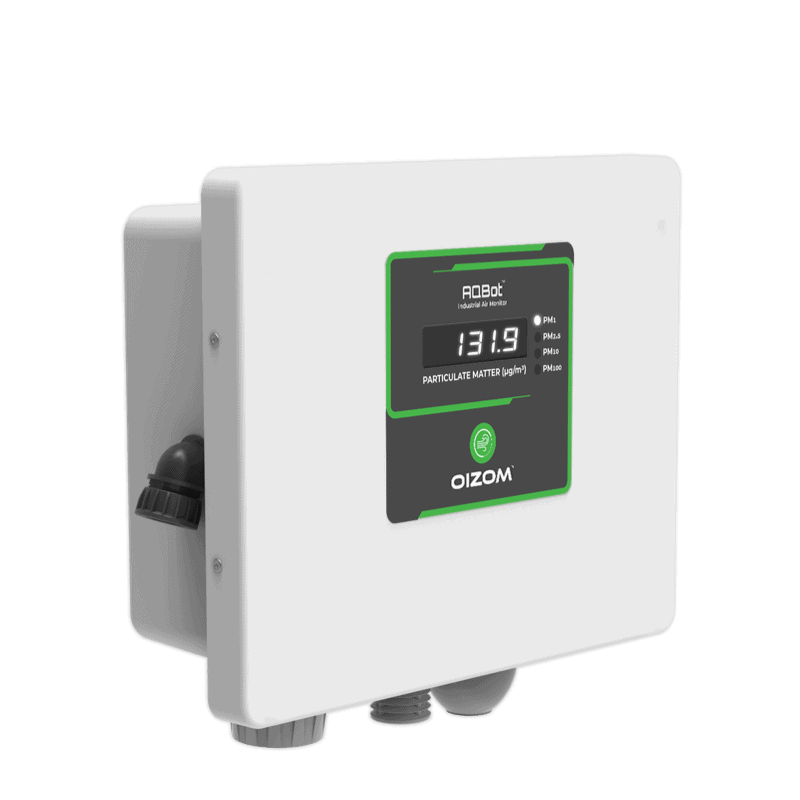
A PM2.5 PM10 environmental dust monitor measures both fine and coarse particles to give a complete picture of outdoor air quality. An environmental dust monitor is built for continuous, all-weather operation, which makes it ideal for ambient air monitoring. In this guide, we explain what an environmental dust monitor is, why it matters, how it works and how to choose the right PM2.5 PM10 environmental dust monitor.
What Is an Environmental Dust Monitor?
An environmental dust monitor is an instrument that continuously measures airborne dust in outdoor or ambient conditions. A PM2.5 PM10 environmental dust monitor tracks both fine (PM 2.5) and coarse (PM 10) particles at the same time. It is designed to run day and night in all weather, often with solar power and remote data access. As a result, an environmental dust monitor is the standard tool for ambient air quality networks.
Why an Environmental Dust Monitor Matters
Outdoor air quality affects entire communities, so an environmental dust monitor is vital for public health. Pollution from traffic, industry and construction changes throughout the day. Without an environmental dust monitor, authorities and businesses cannot track or prove ambient conditions. Therefore, it supports clean-air action, regulatory reporting and public awareness.
Key Benefits of an Environmental Dust Monitor
- Dual measurement of PM 2.5 and PM 10 together.
- Continuous, all-weather operation.
- Remote data access and cloud dashboards.
- Regulatory reporting for ambient air quality.
- Early warning of pollution spikes.
How an Environmental Dust Monitor Works
An environmental dust monitor uses optical or laser light-scattering sensors housed in a weatherproof enclosure. Outdoor air is drawn through an inlet, and particles scatter light inside the chamber. The sensor then converts this into PM 2.5 and PM 10 values. Most units add solar power, GSM or Wi-Fi connectivity, remote dashboards and automatic reporting. Because of this rugged design, an environmental dust monitor runs reliably for years outdoors.
Where an Environmental Dust Monitor Is Used
- Ambient air quality monitoring stations.
- Smart city pollution networks.
- Industrial fence-line monitoring.
- Construction and infrastructure projects.
- Research and government agencies.
Choosing a PM2.5 PM10 Environmental Dust Monitor
When choosing a PM2.5 PM10 environmental dust monitor, focus on accuracy, durability and connectivity. First, confirm reliable PM 2.5 and PM 10 measurement. Next, check the weatherproof rating and power options such as solar. Also look for remote access, data logging and compliant reporting. Finally, choose a trusted supplier for installation and calibration. Explore our range on the products page, and learn more from the World Health Organization.
Conclusion
A PM2.5 PM10 environmental dust monitor gives a complete, continuous view of outdoor air quality. It supports public health, clean-air action and regulatory compliance. Whether for a city network, an industrial boundary or a research project, the right environmental dust monitor is essential. To find the ideal solution, contact Saksham Scientific today.